
An analysis of the river’s value, the pressures upon it and the conduct of institutions in the „Rijeka Zeta” Nature Park, with a review of documentation from 2018 to 2026
Podgorica / Danilovgrad, September 2026
Executive summary
The Zeta River was declared a Nature Park in 2019 on account of its exceptional biodiversity, and the area has also been proposed for the European ecological network Natura 2000. Seven years later, the protected area still has no joint management body in place and no ranger service on the ground across most of its territory. Over that same period, inspection authorities repeatedly confirmed that untreated wastewater was being discharged into the river and issued decisions, misdemeanour orders and fines, while laboratory analyses by accredited institutions showed that limit values had been exceeded several times over. A comparison of the findings from 2021 and from 2025 shows that, despite every measure imposed, the measured values of the key parameters have remained practically unchanged. This text assembles the facts, the documentation and the chronology, and explains why the answer to the pollution of the Zeta River today is primarily a question of enforcing the law rather than of any shortage of regulations, money or technology.
1. Why the Zeta River matters
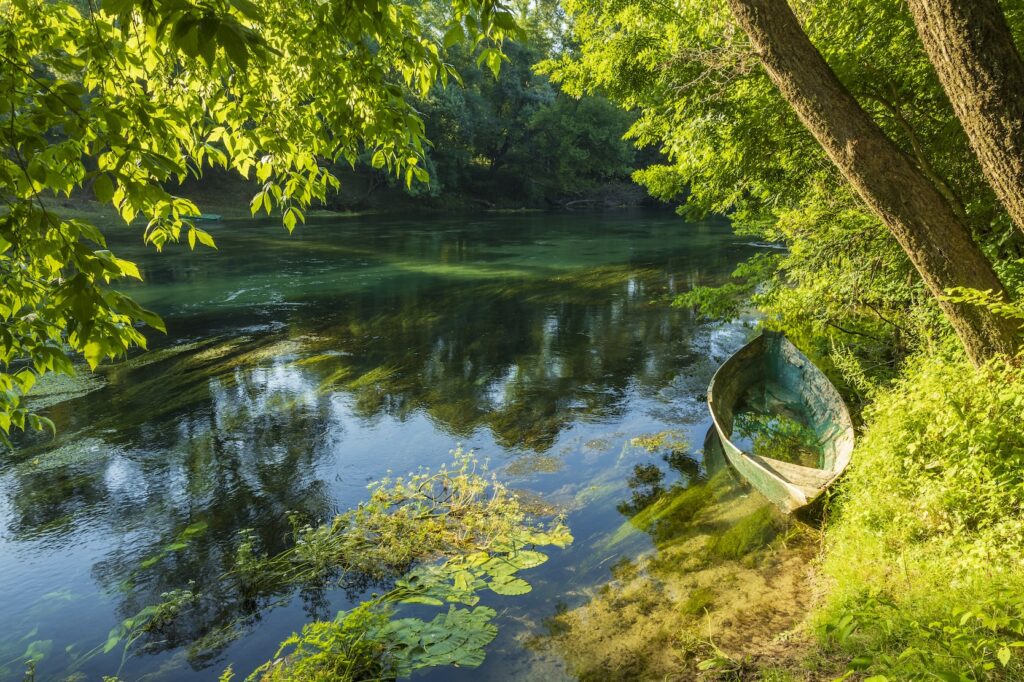
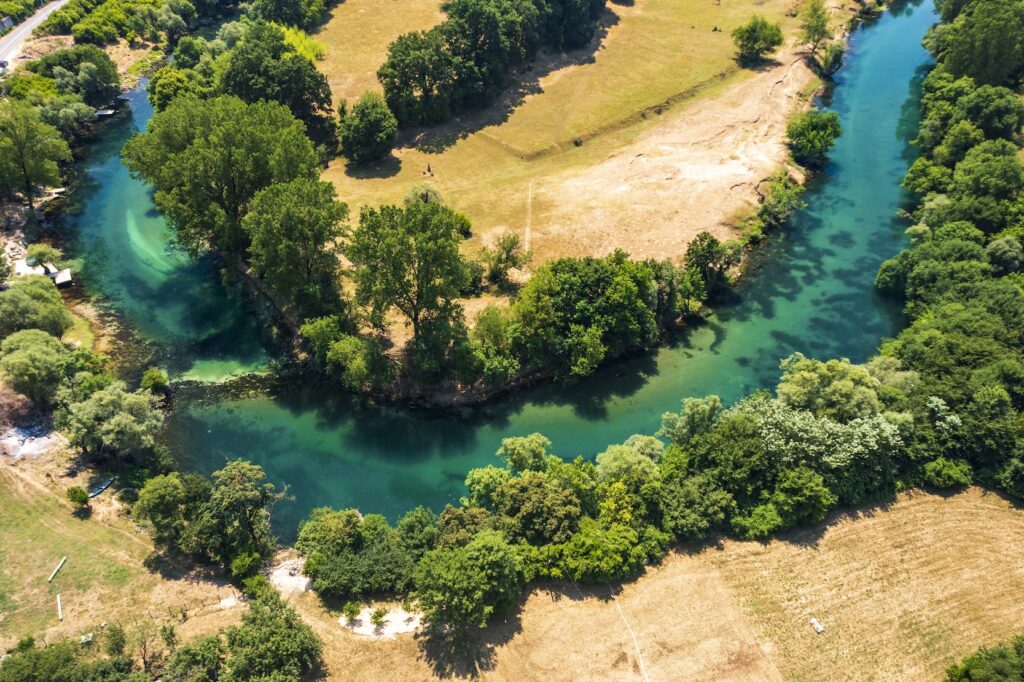
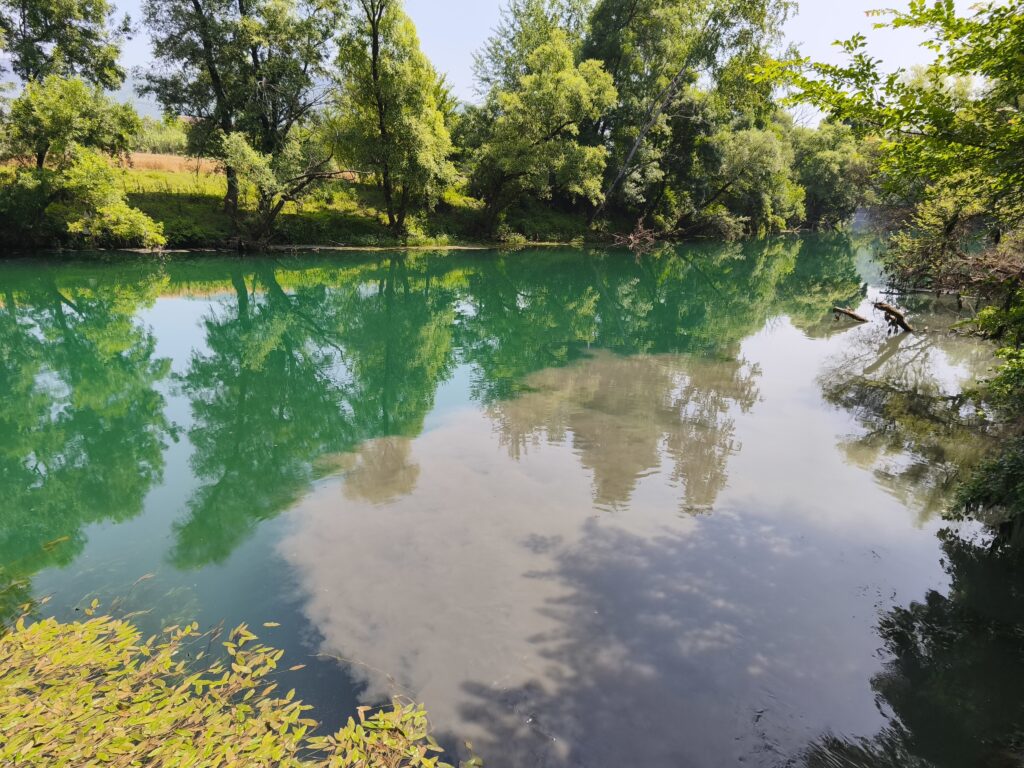
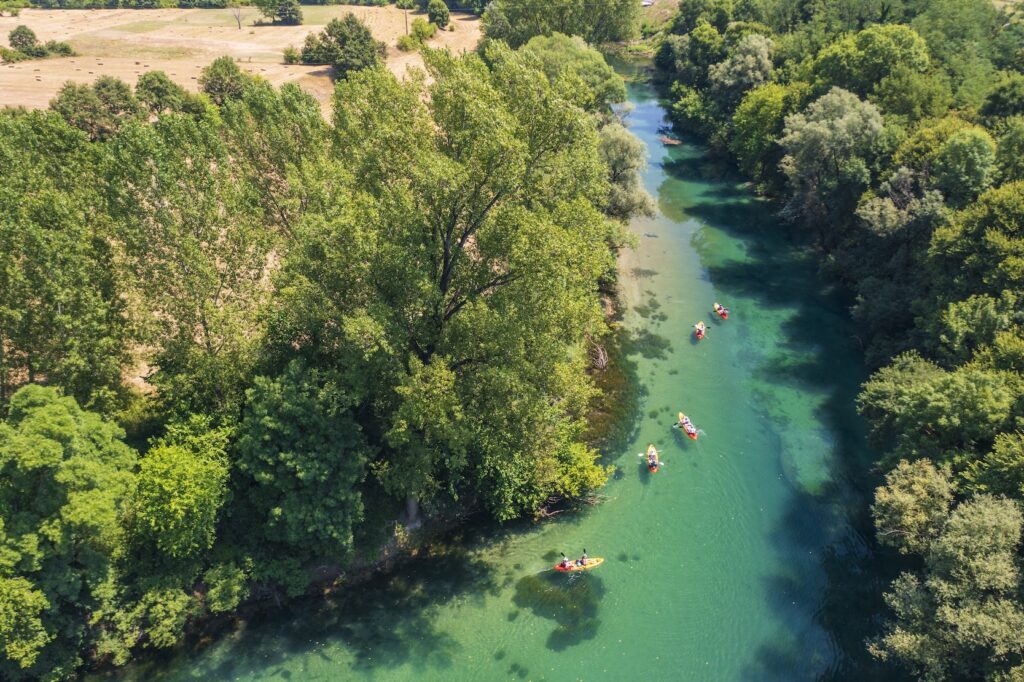
The Zeta is one of the few European rivers that has preserved its natural meandering course, the floodplain meadows along its banks and the unbroken link between the aquatic and the terrestrial ecosystem to this day. Its flow sinks underground and resurfaces, and from Glava Zete to the confluence with the Morača the river shapes the Bjelopavlići plain, its fields, its water sources and its settlements over a length of some fifty kilometres. It is precisely that length of unaltered watercourse, combined with the floodplain habitats that accompany it, that makes this an area whose significance has long since exceeded the boundaries of the two municipalities through which it flows.
The protection study on the basis of which the area was declared protected confirmed a richness rarely encountered in so small a space. Within the Nature Park, 774 plant species have been recorded, several of which appear on the CITES list and on the list of the Bern Convention. How important the river is for fish fauna is shown by the fact that it is home to 32 fish species, among them three trout species. A total of 58 species of EU importance have been recorded in the area, with particular significance attached to the crayfish Austropotamobius pallipes, to a number of fish species (Barbus meridionalis, Cobitis elongata, Salmo macrostigma, Salmothymus obtusirostris), and to numerous butterflies, amphibians and reptiles. Around ten habitat types of international importance are present here, listed in Annex I of the Habitats Directive, that is to say on the list of Natura 2000 habitats. Twenty-one mollusc species have been recorded, along with the internationally protected freshwater white-clawed crayfish (Austropotamobius pallipes), a species in continuous decline across Europe and a classic indicator of clean water.
The upper course is inhabited predominantly by salmonid species, the lower course and the small tributaries by cyprinids. Among them are species protected under national legislation which are at the same time the most endangered: the softmouth trout (Salmo obtusirostris), the marble trout (Salmo marmoratus) and the brown trout (Salmo farioides). The softmouth trout is endemic to Zeta river, first described in 1851, and its survival depends on no other watercourse in the world. When we speak of what is lost to pollution, this is not an abstraction but a specific species with nowhere else to go.
The valley of the Zeta river is probably the largest habitat of the Italian crested newt in Montenegro, a species endangered at the European level, which places this area among the sites of European importance for amphibian conservation. Among reptiles, the European pond terrapin and Hermann’s tortoise are present, as are the four-lined snake and the leopard snake; among mammals, the Montenegrin vole (Microtus tomasi), an endemic of the south-western Balkans described from material collected at Beri in 1903, is present together with roosts of the Mediterranean horseshoe bat, one of the most endangered bat species.
The most striking figure concerns birds. Within the Nature Park, 265 bird species have been recorded, roughly 75 per cent of the entire ornitofauna of Montenegro. The area is a significant migratory corridor, its of particular importance for the national survival of seven species, and research has classified it among Important Bird Areas, the IBA category.
We have to add something that studies rarely capture in figures. The Zeta is a water source and a water resource; it is the agricultural foundation of Bjelopavlići; it is the place where generations learned to swim; and it is the only reason Danilovgrad can speak of nature-based tourism at all today.
2. Passive protection, or protection on paper
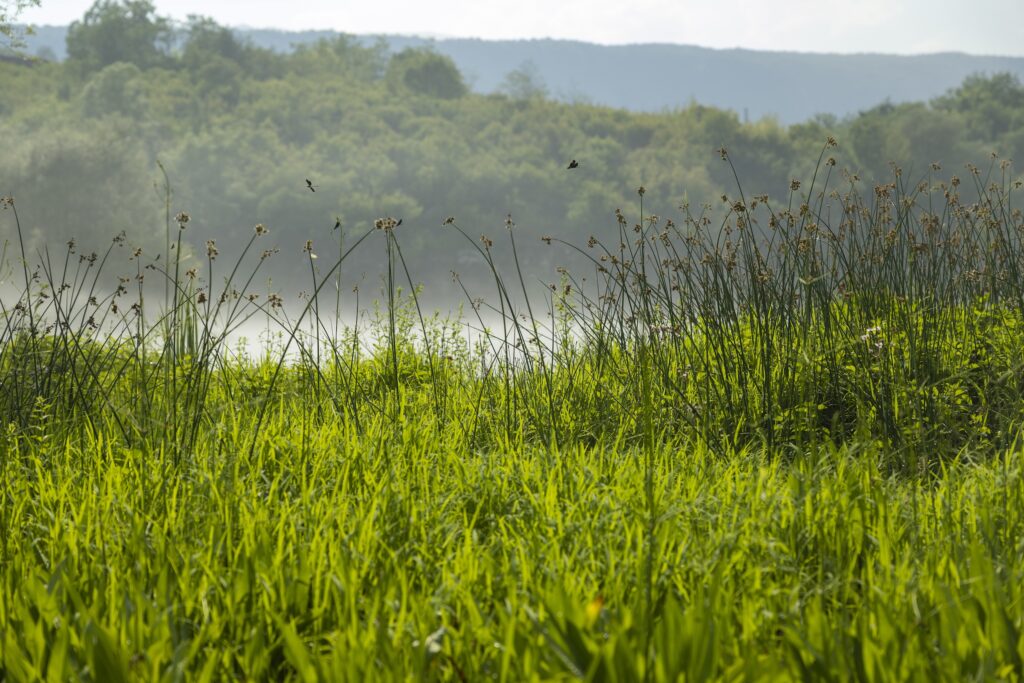
The protection procedure was initiated in February 2019 through a joint initiative by the Municipality of Danilovgrad and the Capital City of Podgorica addressed to the Environmental Protection Agency. The Assembly of the Municipality of Danilovgrad adopted the draft decision in November of that year, and the Government of Montenegro adopted the Decision declaring the „Rijeka Zeta” Nature Park in December 2019. The Park covers a total of 121.78 square kilometres, of which 80.8 per cent lies within the territory of the Municipality of Danilovgrad and 19.2 per cent within the territory of the Capital City. Three protection zones were established, and the decision also provided for the formation of a management body tasked with adopting and implementing a management plan, providing a ranger service and monitoring the condition of the protected area.
Seven years have passed since that moment. The part of the Park belonging to the Capital City was taken over by the Agency for the Management of Protected Areas of Podgorica, which has a professional service and rangers in the field, and that part amounts to somewhat more than twenty-six square kilometres. The remainder, more than four fifths of the protected area, has been left without an operational manager. The limited liability company „Park prirode rijeka Zeta” was formally established, with shares of 81 per cent held by the Municipality of Danilovgrad and 19 per cent by the Capital City, yet it was noted in assembly debates in Danilovgrad that no executive director has been appointed, that no ranger service has been provided, and that neither the annual management plan nor the plan for staff development and training has been adopted. Instead of a debate on how to protect the Park, debate has repeatedly been opened on redrawing the boundaries of the protection zones, and even on abolishing the Park altogether.
In a joint statement issued in July 2026, signed by the Montenegrin Ecologists Society, the Centre for Protection and Research of Birds, Parks Dinarides, Eko-tim, the Environmental Programme and Green Home, this was put plainly. The Capital City of Podgorica and the Municipality of Danilovgrad have to this day failed to establish a joint manager of the Nature Park, although they were obliged to do so, and without a functional management system it is not possible to ensure systematic monitoring, coordinated protection or the consistent implementation of conservation measures.
This is not a formal oversight. A protected area without a ranger service means that the local administration is under no legal obligation to be on the river every day, to record a discharge, to draw up an official note, to initiate proceedings. In practice it means that the work of surveillance has been left to residents with mobile phones and to non-governmental organisations working from one project to the next, or on a voluntary basis.
3. Pressures on the river
The studies and the research conducted so far agree on the diagnosis. One section of the watercourse, from Glava Zete to Slap, is less endangered, primarily because of depopulation, while the lower course is severely endangered as a result of uncontrolled use of resources, the spread of settlements, agricultural production, farms and industrial facilities.
The first and gravest pressure is untreated municipal wastewater. It comes above all from urban settlements, from industrial plants on the very bank of the river and from farms, but also from smaller settlements with neither a sewerage network nor a treatment plant. In documentation from earlier years, the Municipality of Danilovgrad was described as an environment with only a few kilometres of sewerage network and no wastewater treatment plant, which means that the greater part of municipal wastewater is still dealt with today by septic tanks, by leakage and, ultimately, by the river.
The second pressure is waste. Numerous illegal waste dumps have been recorded within parts of the Park, so that with the first rains the contents dissolve and are carried across the protected area. Waste on floodplain terrain is not an aesthetic problem. It is the route by which heavy metals and other hazardous substances enter the soil and the groundwater.
The third pressure is unplanned and haphazard construction in the plain and alongside the river, which permanently destroys riparian vegetation, narrows the floodplain belt and severs the link between the river and its meadows. Alongside this come the quarries in the catchment, the conversion of agricultural land and the pressure on water sources.
The fourth pressure is hydrological. The operation of the hydropower system causes daily fluctuations in water level and temperature spikes in the river, a stress for fish that directly disrupts the reproductive cycle, and fish kills have been recorded in connection with the release of oxygen-poor water from reservoirs upstream. We can add poaching, including night fishing to this, which residents have been pointing out for years.
The fifth pressure, and the one that keeps all the others alive, is the failure to enforce the regulations. The documentation that follows speaks to it.
4. What the documentation shows
What follows are extracts from official acts of the inspection authorities and from reports by accredited laboratories. All the documents cited exist in the original and are available for inspection. The quotations below are English translations of texts originally issued in Montenegrin.
4.1. The year 2019: odours that, by regulation, cannot be measured
In the reply of the Environmental Inspection Department of the Administration for Inspection Affairs, no. 01-1775/2 of 3 January 2019, addressed to the Mayor of the Municipality of Danilovgrad following a request for intervention concerning the pig farm in Spuž, it is stated that on 3 September 2018 the environmental inspector issued a decision ordering that the impact of the farm’s operation on the environment and the emission of unpleasant odours be measured through an authorised legal entity. The outcome is described as follows:
„… it did not carry out the said measurements because national legislation does not prescribe limit values for ammonia and hydrogen sulphide, given that farms are recognised as potential sources of air pollutants, ammonia and hydrogen sulphide. Furthermore, the „Centre for Ecotoxicological Research” does not possess equipment for testing the said gaseous pollutants … On this basis, the administrative proceedings were discontinued.”
This single paragraph explains seven years of complaints by the residents of Spuž. The unpleasant odour from the farm could not be legally established because there was no prescribed limit value against which to measure it and no equipment with which to measure it, so the proceedings were discontinued. The problem did not disappear, the procedure did. It is important to explain here that the unpleasant odour is a consequence of improper management of waste and wastewater at the farm, which produces high concentrations of ammonia and hydrogen sulphide, and at such concentrations these are hazardous to the respiratory tract.
4.2. September 2019: the inspection record from the farm visit ordered by the Government
On 26 September 2019, pursuant to the conclusions of a meeting held the previous day at the premises of the Government of Montenegro, the pig farm in Spuž was visited by a joint team consisting of the chief environmental inspector, the chief water management inspector, the environmental and water management inspectorates, the municipal inspectorate and the police, the veterinary inspectorate and the Food Safety Administration. The reason, as stated in the report, was the frequent complaints by residents about strong unpleasant odours and the diversion of manure and wastewater into the Zeta River.
The report notes that the holding lies 226 metres from the nearest residential buildings and 350 metres from the Zeta River, and that on a complex of 65,282 square metres there are 16 buildings with a closed production cycle and some 9,000 pigs, of which 728 are sows. The state of the waste management system on the day of the inspection is described unambiguously:
„… the system for separating the solid and liquid fractions has been abandoned, the separator has been put out of operation, the impermeable base of the lagoon has been damaged, and both central channels from the buildings on the left and on the right have been connected to a pipe (collector) which carries the entire contents directly into the Zeta. … The lagoons are not in operation, the impermeable base has been breached and the contents have spilled into the Kraljičino oko water source near Daljam.”
The same document also records the legal status of the discharge:
„… it is considered that the investor … has not held, since 1 June 2019, a water permit for the system for the collection, treatment and discharge of wastewater for the pig farm in the settlement of Grbe-Spuž.”
The report further notes that the stormwater drainage of the animal feed plant, the slaughterhouse and the petrol station is connected to the same pipe, that the pipe’s diameter is too small to accept the full volume, causing the contents to back up, and that the question of managing the collector remains unresolved, since no one owns it and therefore no one is responsible for its maintenance. The team’s proposals included designating a manager for the collector, checking and bringing back into operation the separator, the pumps and the lagoons, upgrading the ventilation and engaging a team of experts, applying the European reference document on best available techniques for the intensive rearing of pigs.
This date is worth remembering. In 2019 the state, at the highest level, had an entirely accurate diagnosis and a list of measures.
4.3. The year 2021: decisions, fines and a treatment unit that does not work
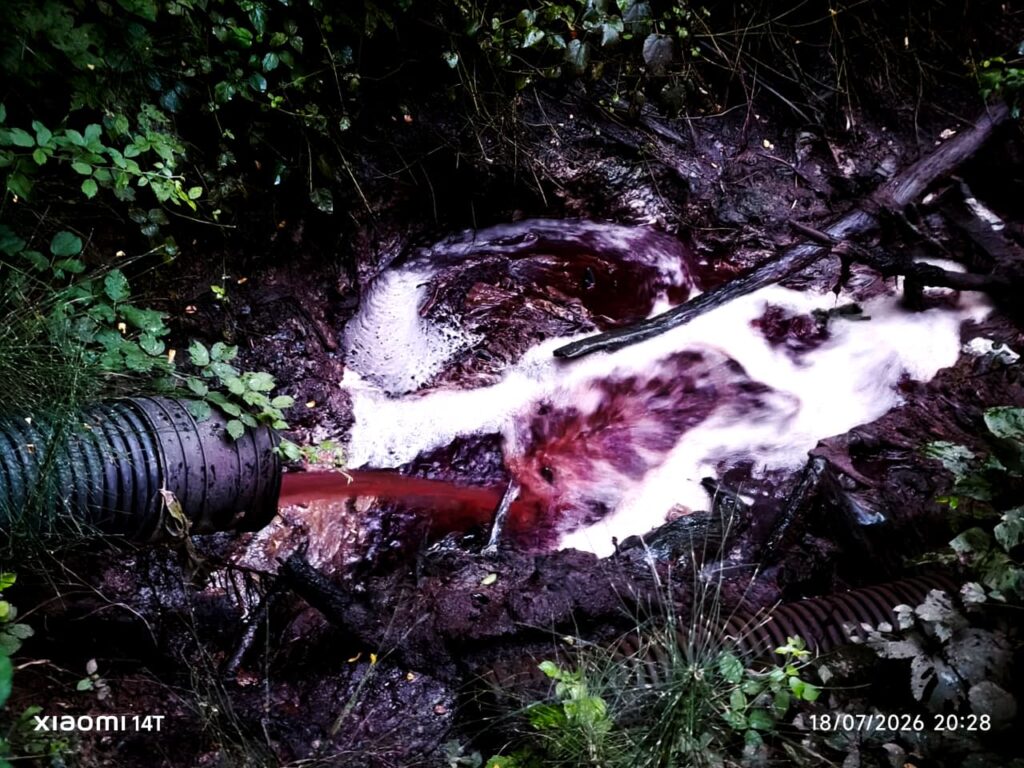
On 12 August 2021, following a citizens’ initiative and a video recording of the discharge of red-coloured water, a field inspection was carried out at the slaughterhouse in Grbe. Inspection record no. 0305-737/21-3 150 established that the wastewater treatment unit was not in fully functional condition owing to the failure of the main pump, while examination of the CETI report on the sample of 29 July 2021 established that the sample of wastewater discharged into the Zeta did not meet the conditions prescribed by the Rulebook, because of an increased content of suspended and settleable solids. Misdemeanour orders were issued the same day against the legal entity and the responsible person, and a decision ordered that the unit be immediately restored to a functional and sound condition.
A follow-up inspection on 4 October 2021 established the following:
„… it may clearly be concluded that the wastewater treatment unit, despite the repair measures undertaken, does not fulfil the role for which it is intended, i.e. that the treatment of the wastewater and the operation of the unit are unsatisfactory, resulting in the discharge of insufficiently treated wastewater …”
There followed a request to initiate misdemeanour proceedings before the Misdemeanour Court in Danilovgrad, dated 5 October 2021, and a decision imposing a fine of 2,000 euros, with the proviso that the fine would not be collected if the entity fulfilled its obligation by 31 December 2021.
In parallel, a letter from the Water Management Inspection Department dated 13 September 2021, concerning the same initiative, established that the dairy factory in Lazine had already been ordered on 6 November 2019 to ensure the treatment of its wastewater before discharge into the natural recipient and to install a device for measuring volumes, and that the decision had not been executed within the deadline, which is why a procedure of administrative enforcement through fines was initiated. The same letter also records that waste was found deposited on the very edge of the high bank of the Zeta, ash originating from burned mixed municipal waste.
In letter no. UPIN-0304-736/21-9950/2 of 25 February 2022, responding to an initiative for inspection on account of the discharge of untreated wastewater containing blood, the environmental inspectorate confirmed that the repeated analyses had not satisfied the conditions of the Rulebook, that a fine of 4,000 euros had been imposed, and that a new decision on administrative enforcement had been adopted, carrying a fine of 5,000 euros should the ordered measures not be executed by 1 June 2022.
4.4. The years 2024 and 2025: figures that do not change
Water quality test report no. 88/24 of the Institute of Hydrometeorology and Seismology, covering a wastewater sample taken on 25 December 2024 at the pig farm in Spuž, from the manhole from which the water is carried by a shared channel into the Zeta River, contains both an organoleptic description and measurement results. The expert opinion states that the sample does not meet the conditions of the Rulebook on the quality and sanitary-technical conditions for the discharge of wastewater, and the description of the sample records a strong unpleasant odour of pig faeces.
| Parameter | Measured | Limit value | Exceedance |
| Suspended solids (mg/L) | 563.6 | 35 | 16 times |
| Settleable solids (mL/1 h) | 1.0 | 0.5 | 2 times |
| BPK5 (mg 02/l) | 110 | 25 | 4.4 times |
| HPK (mg 02/l) | 246 | 125 | 2 times |
| Total nitrogen (mg N/L) | 33.07 | 15 | 2.2 times |
| Ammonium ion (mg N/L) | 13.95 | 10 | 1.4 times |
| Nitrates (mg N/L) | 8.90 | 2 | 4.5 times |
| Total phosphorus (mg P/L) | 10.52 | 2 | 5.3 times |
| TOC (mg/l) | 55.14 | 30 | 1.8 times |
In the same report, the expert opinion of the Head of the Water Quality Section contains a recommendation that is decisive for this discussion:
„It is recommended that measures be taken to maintain the good condition of the effluent waters, continuous cleaning of the farm platform with large quantities of water, the construction of settling separators, the removal and disposal of sludge in the prescribed manner, the use of quality cleaning agents, while the best option is the construction of a treatment plant for this type of wastewater.”
In other words, an accredited state laboratory recommended in writing, as far back as the end of 2024, that a treatment plant be built. This is not a demand from activists, but an institution’s finding.
Test report no. 389/01/25/1 of the Centre for Ecotoxicological Research, covering a wastewater sample taken at the very point of discharge into the Zeta River at Grbe, at coordinates N42°30’3.9816”, E19°11’50.784”, shows the following.
| Parameter | Measured | Reference value | Exceedance |
| BPK5 (mg 02/l) | 109 | 25 | 4.4 times |
| HPK (mg 02/l) | 283 | 125 | 2.3 times |
| Total nitrogen (mg N/L) | 113 | 15 | 7.5 times |
| Total phosphorus (mg P/L) | 24 | 2 | 12 times |
It is worth pausing here. The biochemical oxygen demand measured in 2021, the figure that produced decisions, misdemeanour orders and two fines, is practically identical to the figure measured in 2025 at the very point of discharge into the river. Four years of administrative proceedings, administrative enforcement and announced technical measures have not changed what enters the Zeta.
5. What those figures mean for the river
For a public that does not read laboratory reports, these data require translation into the language of the ecosystem.
A biochemical oxygen demand of more than one hundred milligrams per litre means that the water entering the river carries an enormous load of readily degradable organic matter. The decomposition of that matter consumes oxygen from the water. Oxygen is to fish and aquatic invertebrates what air is to us, and salmonid species, among them the endemic softmouth trout, are among the organisms most sensitive to its absence. A fish kill is therefore not a mysterious event, but a predictable consequence.
Total nitrogen seven and a half times above the limit value and total phosphorus between twelve and twenty-four times above the limit mean eutrophication, that is, the proliferation of algae driven by reduced oxygen, rising temperature and the nutrient supply derived from organic matter in the wastewater. It is, in other words, a process in which an excess of nutrients triggers the excessive growth of algae and aquatic plants, the water loses its transparency, oxygen falls further at night, the composition of the community of organisms changes and sensitive species disappear. The ammonium ion above the limit value is an additional burden, because depending on temperature and pH it converts into ammonia, which is directly toxic to fish.
Suspended solids sixteen times above the limit silt up the riverbed. That is a blow to precisely what makes the Zeta valuable, the gravel bed on which salmonid species spawn, the habitats of the white-clawed crayfish and the freshwater mussel, and the dragonfly communities used as bioindicators in the biomonitoring programmes on this river.
And finally, the odour. The hydrogen sulphide, ammonia and methane that the residents of Spuž can smell are not an inconvenience. They are the product of the anaerobic decomposition of organic waste. What is detected in the air is a reliable indicator of what is simultaneously ending up in the water and underground.
6. What citizens and non-governmental organisations have done
Montenegrin Ecologists Society and other organisations have worked for years on research into and protection of the Zeta River, through the mapping of species and habitats, biomonitoring programmes based on bioindicator species, projects for the return of native species, educational materials and participation in environmental impact assessment procedures. That expert foundation matters, because without it there would be no data on the basis of which it is possible to state today precisely what is being lost.
Even so, what is true must also be said. The greater part of what has shifted over the past two years was set in motion by a group of citizens who decided to stop the pollution of the river, and only then did the expert and non-governmental community join them.
Citizens submitted initiatives for inspection and collected photographic documentation of discharges during 2025 and 2026. A criminal complaint was filed against one of the polluters, and to this day those who filed it have not been informed of any action taken. In the repeated environmental impact assessment procedure, after the approval of the impact assessment study was annulled by a decision of the Ministry of Ecology, three members of the Commission for the assessment of the environmental impact study formally declared themselves against granting approval, with a detailed explanation concerning procedural irregularities, the discrepancy between the situation presented and the situation found on the ground, the absence of any analysis of stormwater from handling surfaces, and the absence of any assessment of cumulative impact on the Nature Park. Administrative proceedings were initiated before the Administrative Court of Montenegro against the building permit, together with a request to suspend its execution, precisely on the grounds that the measures prescribed by law had not been fulfilled. A request was made to suspend the procedure for issuing the environmental permit until those proceedings are concluded.
Alongside the legal steps, public pressure has continued. Citizens’ assemblies and focus groups have been organised in Spuž, a performance was staged in front of the ministries building, the citizens’ initiative „For the Zeta River, for a Resilient Town” has been circulated for signature, and a boycott of the polluters’ products is under way. The question of the spending of public funds has also been raised, including support from the national budget and from European funds, on the position that support for production must not become a reward for pollution. A meeting was also held with the Delegation of the European Union on the pollution of the Zeta, attended by representatives of the Government and by the polluters themselves. In July 2026 six non-governmental organisations issued a joint statement with concrete demands to the institutions, which cites the figure that up to 50,000 litres of untreated wastewater are discharged into the Zeta from a single plant each day.
The message repeated at every one of these steps is the same. The responsibility of institutions cannot become the responsibility of citizens.
7. The European framework is not an ornament
The Zeta River has been proposed for inclusion in the European ecological network Natura 2000. That is not a title. It is an obligation to ensure and maintain a favourable conservation status for the species and habitats on account of which the area enters the network. Every new instance of pollution measurably distances Montenegro from meeting that condition, and Chapter 27 is not closed by declarations of intent but by the state of affairs on the ground.
The same framework also answers the question of who pays. The polluter-pays principle is not a domestic improvisation but an obligation Montenegro assumed long ago, and it entails not only a charge but also the remediation of the damage caused. The Law on Waters is explicit, an economic operator discharging wastewater directly into a recipient is obliged to ensure treatment to a level corresponding to the regulations on effluents, is obliged to maintain the equipment in sound condition, to ensure its regular operation and to keep an operating log for the treatment unit, and in the event of pollution is obliged to take measures immediately and to compensate the damage caused.
What is missing, then, is not the regulation. What is missing is its consistent application.
8. Conclusion and demands
The documentation presented in this text leads to a simple finding. The pollution of the Zeta River is not an accident; it is not an unknown, and it is not technically insoluble. It has been known to the institutions since at least 2018. It is described in their own acts, it has been measured by accredited laboratories and it has been sanctioned by fines that have evidently failed to change behaviour. When a fine is lower than the cost of operating lawfully, the fine ceases to be a sanction and becomes the price of a licence to pollute.
The documentation presented in this text leads to a simple finding. The pollution of the Zeta River is not an accident; it is not an unknown, and it is not technically insoluble. It has been known to the institutions since at least 2018. It is described in their own acts, it has been measured by accredited laboratories and it has been sanctioned by fines that have evidently failed to change behaviour. When a fine is lower than the cost of operating lawfully, the fine ceases to be a sanction and becomes the price of a licence to pollute.
That all sources of pollution in the Zeta catchment be identified as a matter of urgency and that extraordinary inspections of all entities reasonably suspected of polluting the river and the surrounding area be carried out, irrespective of whether they are in state or private ownership.
That wastewater treatment units operate where they have been installed, and that they be installed where they are absent, with a mandatory operating log and publicly available measurement results.
That the legal mechanisms be applied consistently, including those that go beyond misdemeanour proceedings where discharges are repeated over years despite the measures imposed, and that compensation be secured for the damage already caused to the environment and to human health, in line with the polluter-pays principle.
That the „Rijeka Zeta” Nature Park finally be given a joint manager and a ranger service on the ground, with a management plan, a budget and staff, because without these a protected area remains a line on a map.
That permanent monitoring of water quality, air quality and the condition of species and habitats be established, with results published publicly, and that limit values for ammonia and hydrogen sulphide finally be prescribed in national legislation, so that it cannot happen again that proceedings are discontinued because what citizens smell every day is formally unmeasurable.
That the municipal dimension of the problem be resolved through planning, that is, a sewerage network and a wastewater treatment plant for Danilovgrad, Spuž and the surrounding settlements, with a clear schedule, deadlines and named persons responsible.
Over the past seven years the Zeta River has acquired a status, a study, protection zones and a place on the European map. The only thing it has not acquired is the most important one: someone whose job it is to defend it. Until that changes, that role will continue to be performed by citizens, and that is the only part of this story of which Danilovgrad and Podgorica can be proud.
Attachments:
The results of the investigation of pollution hotspots along the Zeta River, conducted between May and June 2025, are available below:
Physicochemical analysis of wastewater discharged into surface waters, May 2025: Test results
Physicochemical analysis of wastewater discharged into surface waters, June 2025: Test results
Sources and documentation
Official documents on which this text is based, available for inspection in the organisation’s archive:
Reply of the Administration for Inspection Affairs, Environmental Inspection Department, no. 01-1775/2 of 3 January 2019, addressed to the Municipality of Danilovgrad.
Report on the visit to the pig farm in Spuž of 26 September 2019, drawn up pursuant to the conclusions of the meeting at the Government of Montenegro of 25 September 2019.
Record of the inspection carried out, no. 0305-737/21-3 150 of 12 August 2021, with the accompanying decision no. UPI 0305-737/21-5750/2 and the misdemeanour orders.
Notification of the Water Management Inspection Department no. OI1 0305-737/21-6940/3 of 13 September 2021.
Record of the follow-up inspection no. 0305-737/21-3-181 of 4 October 2021, the request to initiate misdemeanour proceedings no. 0305-737/21-5750/4 and the decision imposing a fine no. UPI 0305-737/21-5750/5 of 5 October 2021.
Reply of the Environmental Inspection Department no. UPIN-0304-736/21-9950/2 of 25 February 2022.
Water quality test report no. 88/24 of the Institute of Hydrometeorology and Seismology of 30 December 2024, for sampling carried out on 25 December 2024.
Test report no. 389/01/25/1 of the Centre for Ecotoxicological Research.
Publicly available sources:
The protection study and the Decision declaring the „Rijeka Zeta” Nature Park, published on the website of the Agency for the Management of Protected Areas of Podgorica, www.auzp.me/zeta.
Joint statement of six non-governmental organisations, „A Nature Park is not a title but an obligation”, July 2026.
Research by the Centre for Investigative Journalism of Montenegro on illegal landfills and unlawful construction in the „Rijeka Zeta” Nature Park.
Authors: MES research team
This text has been prepared for the purpose of informing citizens, partner organisations and donors. Reproduction is permitted with attribution.