
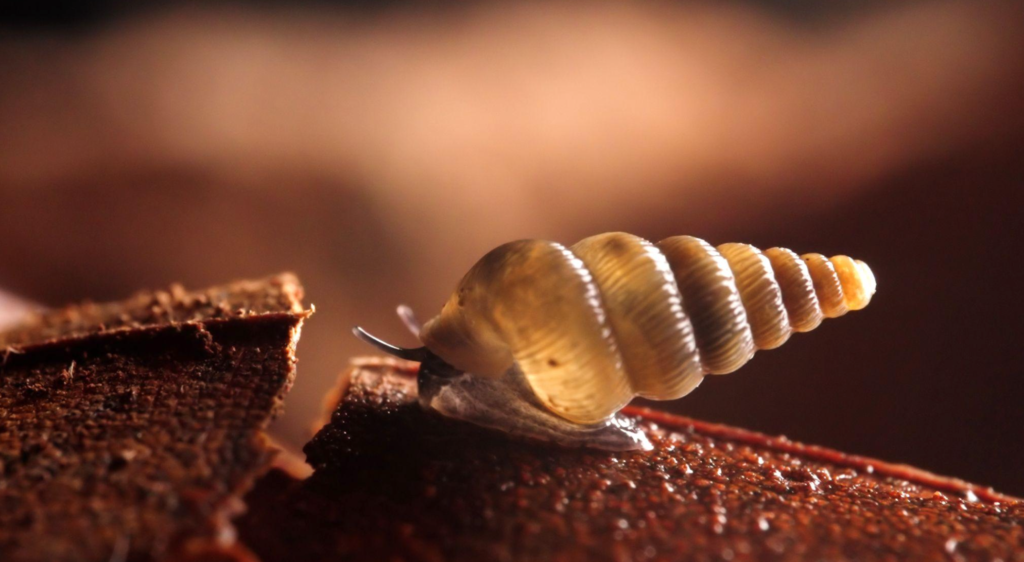
Mixed teams of scientists and citizens have discovered two new snail species in northwestern Montenegro, with the findings published in the peer-reviewed, open-access Biodiversity Data Journal. The discovery highlights the importance of this area for hidden biodiversity and further strengthens calls by local conservationists to include the Komarnica Canyon in the Durmitor UNESCO World Heritage Site and to abandon plans for the construction of a hydropower reservoir in the canyon.
Descriptions of two new species of European snail fauna, named Cochlostoma komarnica and Cochlostoma dobrido, were published today in the open-access journal Biodiversity Data Journal.
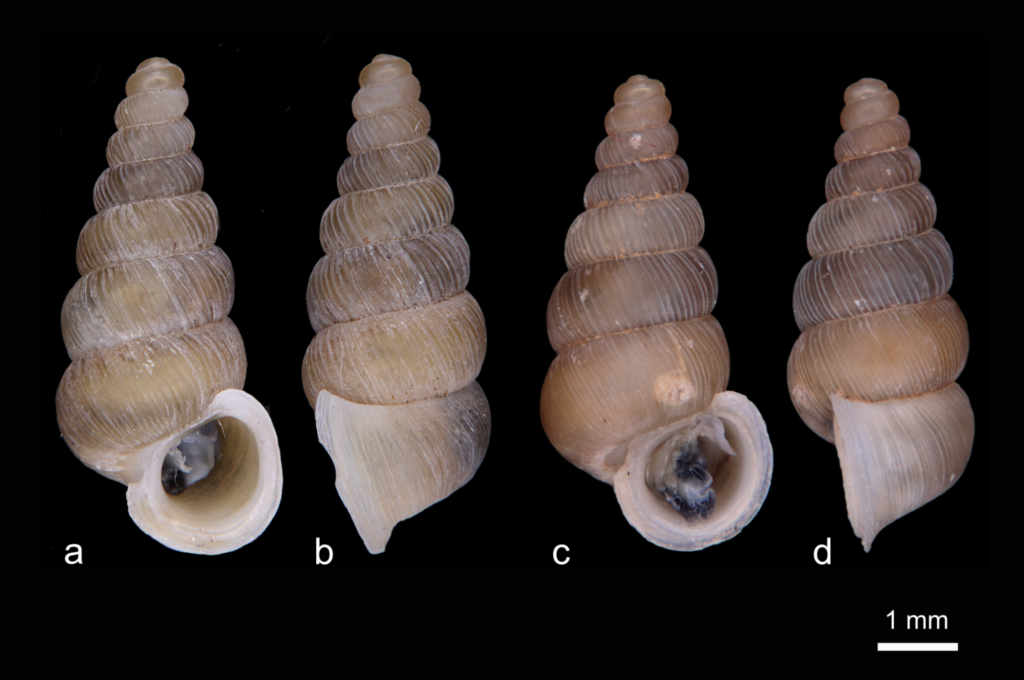
These elegant snails, which do not yet have common names in English, have conical shells about 7 mm long and live on limestone rocks, where they feed on algae and lichens. Unlike most land snails, their eyes are not located at the tips of their tentacles but on the sides of their heads. Their shells also have a circular disc attached to the rear of the body, which can close the shell opening like a door.
The snails were discovered by teams from Taxon Expeditions, an organisation that conducts real scientific research that anyone can join. From 2018 to 2025, expeditions in Montenegro were organised through a collaboration between Taxon Expeditions, the non-profit Taxon Foundation, and local partners from the Montenegrin Ecologists Society.
Mixed teams of international researchers, citizen scientists, local students, and conservationists studied the biodiversity of Durmitor National Park and the Komarnica Canyon. The new snails were found at several locations during fieldwork in the rugged mountain landscape, but it was only after dissection and genetic analysis in the field laboratory that they were confirmed to be new species.
During a vote at the camp, the team decided to name the species after the locations where they were discovered: Cochlostoma dobrido, after the Dobri Do plateau, nestled among the peaks of Durmitor National Park, and Cochlostoma komarnica, after the stunning yet unprotected Komarnica Canyon, south of Durmitor.
“I was amazed by the fact that it is still possible to discover new animal species in Europe,” says Dutch musician Janine Buisman, who took part in one of the expeditions and is a co-author of the scientific paper.
Another author, biologist Jovana Đokić from the Montenegrin Ecologists Society (MES), notes that the rich biodiversity of the canyons, mountains, and gorges in this part of the Balkans remains largely unexplored and undiscovered. “Of particular concern is the planned flooding of the Komarnica Canyon by a hydropower dam and reservoir. This would destroy this wild river canyon and all of its biodiversity, including many species that are still unknown to science,” she says.
Because of these threats, the Komarnica Canyon has become the focus of systematic biodiversity research aimed at building a strong scientific case for its protection. MES therefore calls for the canyon to be included in the Durmitor UNESCO World Heritage Site and for plans for the hydropower project to be abandoned. “Hydropower is neither green nor sustainable when it destroys a unique ecosystem like this one,” says Đokić.
Schilthuizen M, Boomsma R, Faes S, Jousma M, Buisman J, Lankenau D-H, Kountouras S, van den Broek M, Hemelaar EM, Noomen J, de Vries R, Lopatriello G, Limongi AR, Maestri S, Kamchev P, van Manen S, Khalik MZ, Delledonne M, Đokić J, Mićanović A, Popović J, Njunjić I, Zallot E (2026) Dvije nove vrste roda Cochlostoma iz područja Durmitora i Komarnice u sjevernoj Crnoj Gori (Caenogastropoda, Cochlostomatidae). Biodiversity Data Journal 14: e196955. https://doi.org/10.3897/BDJ.14.e196955