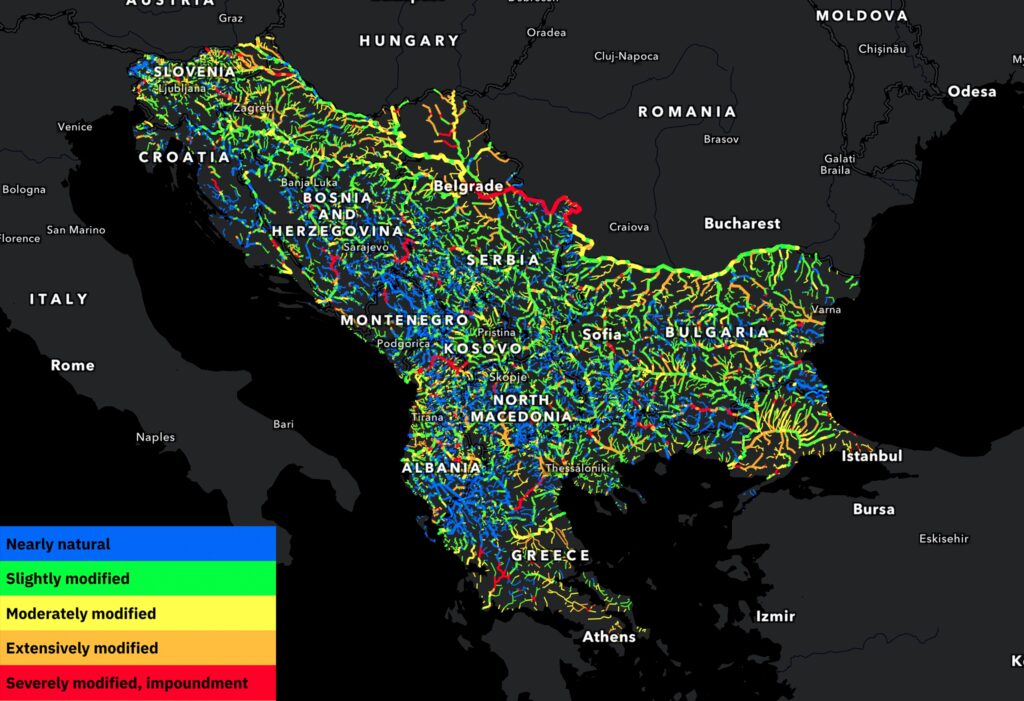
The latest regional report “State of Balkan Rivers 2025” shows that the Balkans are rapidly losing what makes them unique in Europe: large, preserved, free-flowing rivers. According to the data, nearly 2,500 kilometres of natural river channels have been lost in the past 13 years, while the share of almost untouched rivers has fallen from 30% in 2012 to just 23% today.
The study covered more than 83,000 kilometres of rivers in 11 Balkan countries, including Montenegro, and represents the first comparable regional assessment of river conditions in more than a decade.
The main causes of river degradation are:
construction of hydropower plants and reservoirs,
water abstraction,
extraction of gravel and sediment,
infrastructure interventions and channel regulation.
Larger rivers are particularly affected, while smaller mountain streams are still in better condition, although pressures on them are rapidly increasing.
Despite negative trends, the report also highlights positive examples. About 900 kilometres of rivers in the region have been preserved thanks to civic activism, the halting of harmful projects, and the designation of protected areas. The most significant example is the declaration of the “Vjosa Wild River” National Park in Albania.
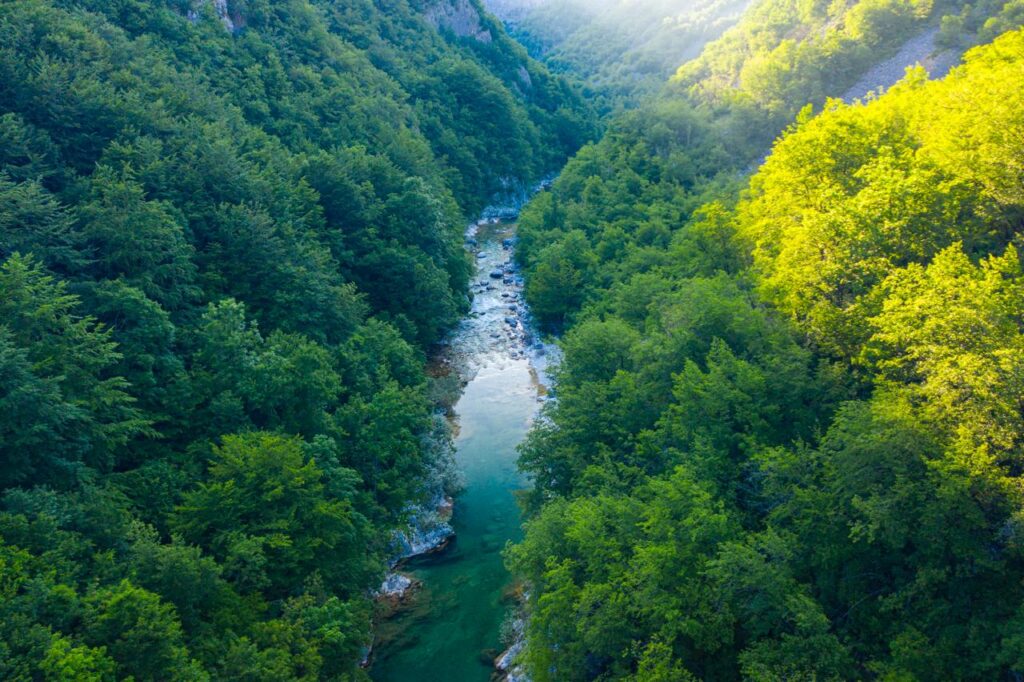
Montenegro is an exceptional case in the European context, as it still contains some of the most intact river basins on the continent, including the Tara and Morača, which form an ecological backbone not only for the country but for the wider region. However, despite its constitutional status as an ecological state, the report’s data point to growing pressures on these systems, primarily through plans for new hydropower projects, illegal gravel extraction, and increasingly intensive infrastructure works.
The authors warn that the Balkans remain the last major stronghold of natural rivers in Europe, but that the space for their protection is rapidly shrinking.
Based on the findings, a call was made to governments and decision-makers to:
systematically protect the remaining preserved rivers,
stop further construction of destructive hydropower projects,
establish regular and coordinated river monitoring,
restore already damaged waterways through natural ecosystem recovery measures.