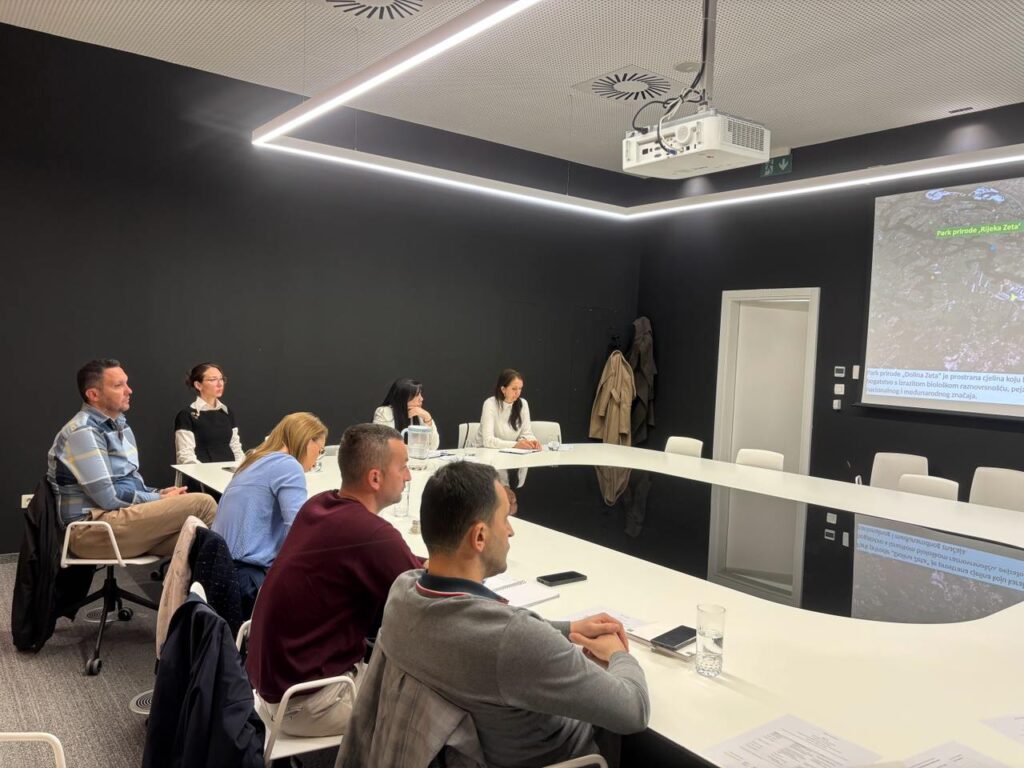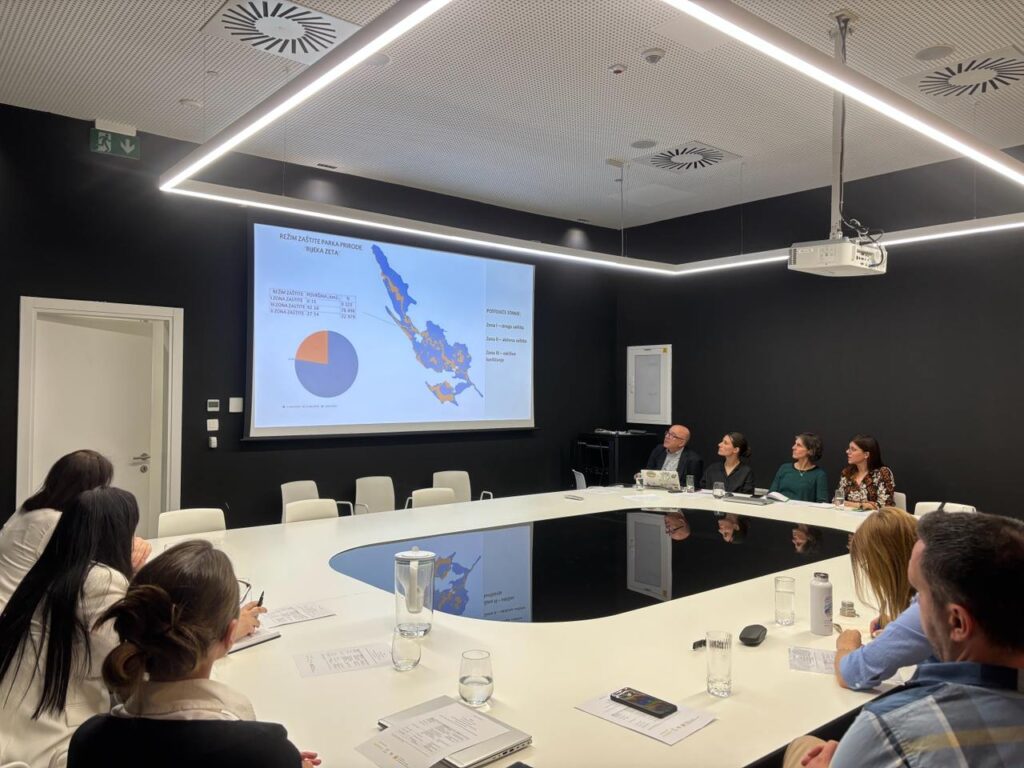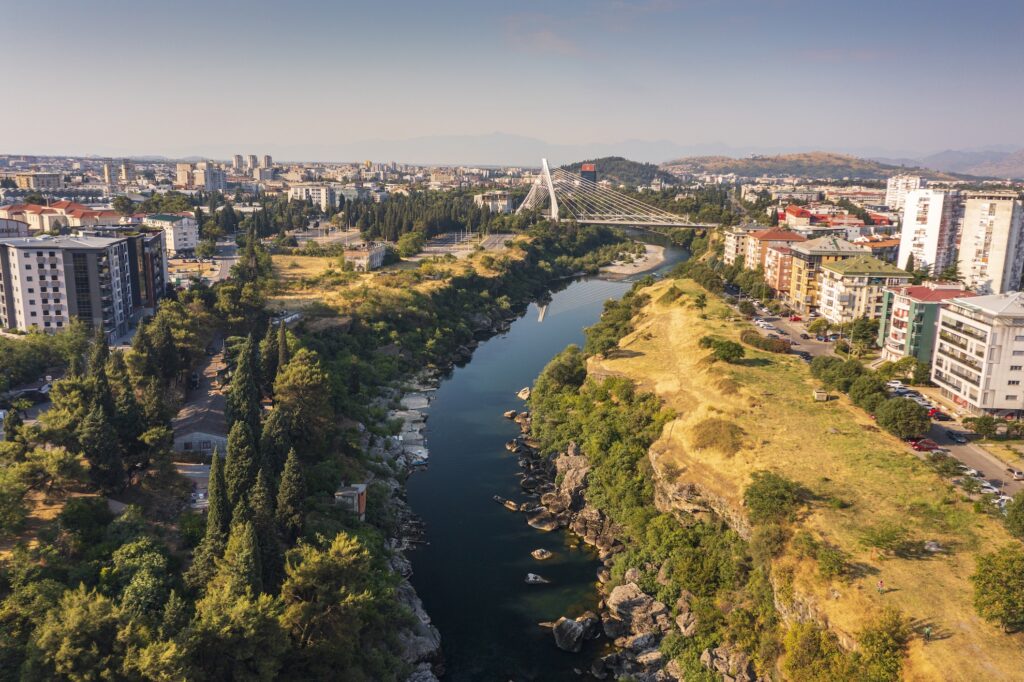
The first meeting of the working group established within the project Fostering Qualified Protection of the Morača River in Montenegro has been successfully held. During the meeting, representatives of relevant ministries, local governments, the Water Administration, and the Environmental Protection Agency were introduced to the project and its planned activities.
Participants expressed support for the project’s core idea and agreed on future cooperation aimed at protecting the Morača River – recognized as one of Montenegro’s most valuable natural assets, as highlighted by Ilinka Alorić, representative of the Ministry of ecology.
Jovana Janjušević, Executive Director of the Center for Protection and Research of Birds (CZIP), emphasized that the project contributes to Montenegro’s obligation related to the designation of Natura 2000 network.
Annette Spangenberg from EuroNatur outlined key project activities and underlined that the establishment and active work of the working group represent a crucial step toward achieving effective protection.
Jovana Đokić, a biologist from the Montenegrin Ecologists Society, reminded participants that the number of free-flowing rivers in Europe, those without major barriers, is extremely limited, making the Morača River even more valuable and important to preserve. She indicated the key pressures affecting the Morača River basin, including gravel extraction, unplanned construction, direct discharge of untreated wastewater, illegal landfills, pesticide use in agriculture, and other threats. Đokić emphasized that river pollution is not only a biological issue, but also a public health and social concern for the country.
The meeting also served to present a proposal on improving effective conservation of Zeta River which was intensively discussed by the members of the SC.
The meeting concluded with an agreement to incorporate comments and documents provided by working group members into the planned studies, as well as to consider expanding the group in order to strengthen cross-sectoral cooperation.
The project is implemented with the support of the EuroNatur Foundation and with financial support from the Aage V. Jensen Charity Foundation.